
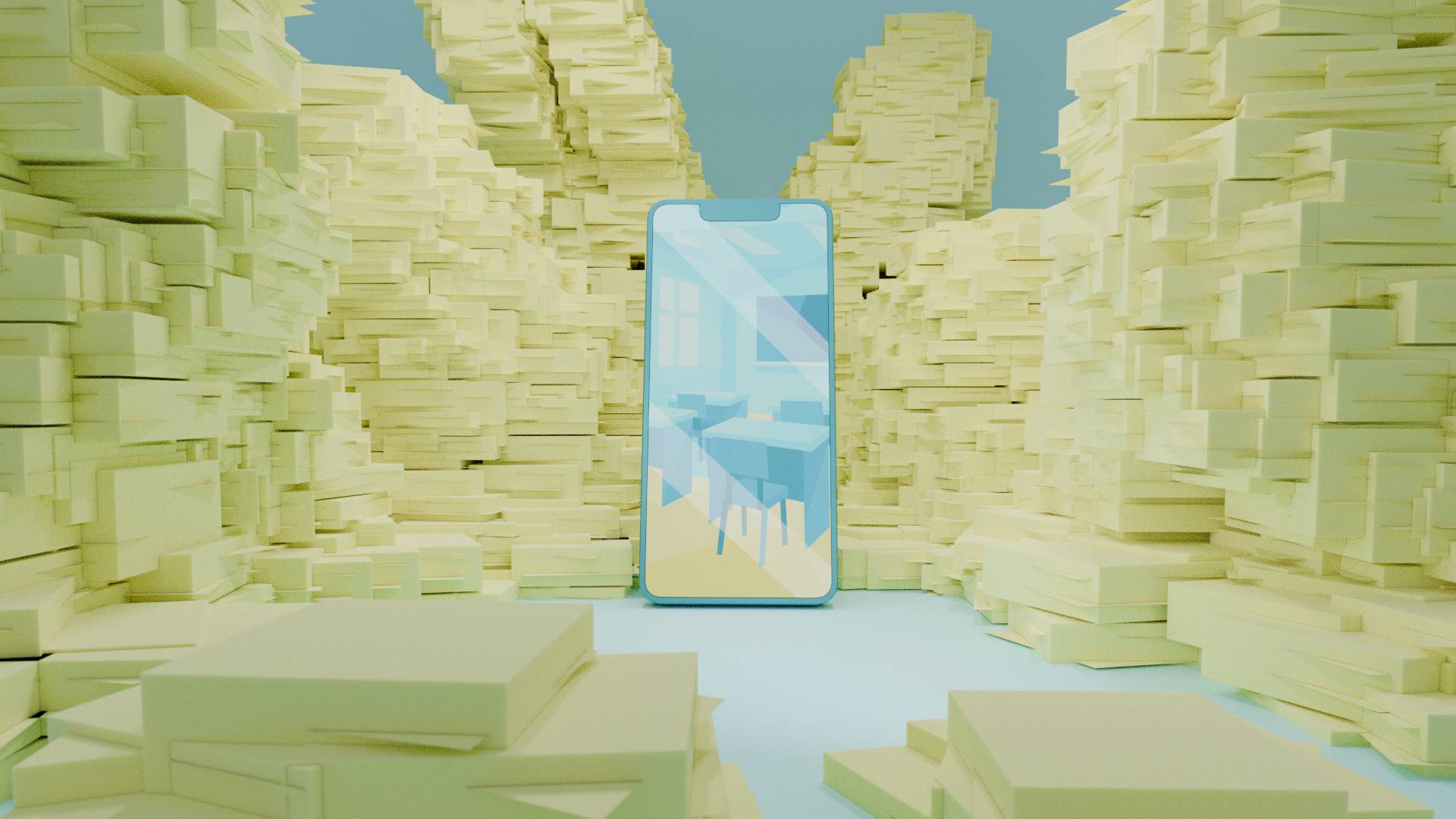
The post-COVID classroom has become something many teachers didn’t train for a battle for attention. As students return to school after long periods of online life, the rules of engagement have shifted. Lessons now compete with TikToks, YouTube shorts, Discord threads, and Netflix tabs open on the side.
But are kids really losing their attention? Or are they adapting to a new way of processing the world?
The “Broken” Attention Span
There’s a loud conversation online blaming phones and “brain rot slop” for ruining kids’ minds. But this oversimplifies the issue. Kids aren’t broken. They’re reacting to a hyperstimulating media environment that’s changing how all of us focus, not just young people.
Apps are built to grab attention over informing the viewer. Short-form content, fast edits, bold headlines, algorithmic hooks. These design choices train users to skim, switch, and swipe. When something bores them or feels irrelevant, it’s gone in a second. This is not a lack of attention, it’s a filtering strategy in an information-heavy world.
In a classroom, that same instinct kicks in. If a lesson meanders, repeats itself, or feels unconnected to anything the student values, their brain says: this isn’t worth my time.
Living in the Age of Information Surplus
We are living in a time of unmatched access to knowledge. Never before in history have students had such direct, constant access to content, from educational material to entertainment, memes to misinformation. This is a boon and a burden.
On the one hand, the sheer volume of helpful resources can unlock self-guided learning, expose students to diverse ideas, and support different learning styles. On the other hand, there’s also a growing flood of misleading, manipulative, and overstimulating content designed not to inform, but to capture attention at any cost.
There’s no opting out of media anymore. It’s not something you enter and exit, it follows you in your pocket, flashes across billboards, echoes in conversation, and shapes your digital footprint. That footprint feeds the algorithm, which in turn feeds you content. Students aren’t just learning in this environment, they’re growing up shaped by it.
They’re navigating this world mostly without maps, unless they are taught how to stop, think, compare, and question. It’s not enough to say what’s true or false. They need tools to spot intent, bias, and emotional hooks.
We should aim to help them build filters, not fences, not to block out the world, but to understand how to move through it wisely.
Just as urgently, we need to recognise how to be bored in a hyper stimulated world.
When content is always within reach even a pause can feel like emptiness. Boredom, once a natural state of rest or creativity, now feels uncomfortable. But boredom isn’t the enemy. It’s the space where curiosity grows and deeper thinking can take root.
Learning how to sit with boredom, to stay with a task even when it isn’t constantly entertaining, will be one of the most important skills for this generation
We’re asking students to thrive in a world that never slows down. That means we also have to teach them how to slow down, not by removing devices, but by showing the value of stillness, reflection, and not knowing something right away.
Educators Are Competing with Production Studios
Let’s be honest. A kid scrolling TikTok is watching creators who spend hours crafting tight, high-impact scripts with music, cuts, and sharp visuals. These clips are made to deliver the most compelling version of an idea in under a minute.
Now compare that to a 45-minute lecture that circles a point before landing it.
This is the reality. Not a failure of the students, but a shift in the language of engagement. If teachers want to be heard, they need to speak that language, without losing the heart of education.
Adapting Teaching for a Media-Saturated World
We can’t ban the world outside the school gates. Nor should we. But we can design lessons that acknowledge the way students engage with content.
Here are some real-world adjustments:
The Future of Learning Isn’t a Step Back
Removing devices, banning screens, or blaming TikTok won’t bring students back. Because the classroom isn’t competing with distraction, it’s competing with relevance.
Students can binge-watch a 10-part documentary series when it speaks to their curiosity. They can learn complex game mechanics or master digital tools through peer-led learning on YouTube. The desire to learn is not the problem.
The challenge is to create learning environments that connect to their curiosity, match the pacing they’re used to, and allow for agency.
We’re in new territory. Education hasn’t faced a shift this significant since the invention of the printing press. But if we adjust how we teach instead of blaming how they learn. We can build classrooms that don’t just hold attention, but honour it.
Thank you for reading, and if you found a part of this useful. Share so it can help others.
Also go come check out my channel on YouTube
